
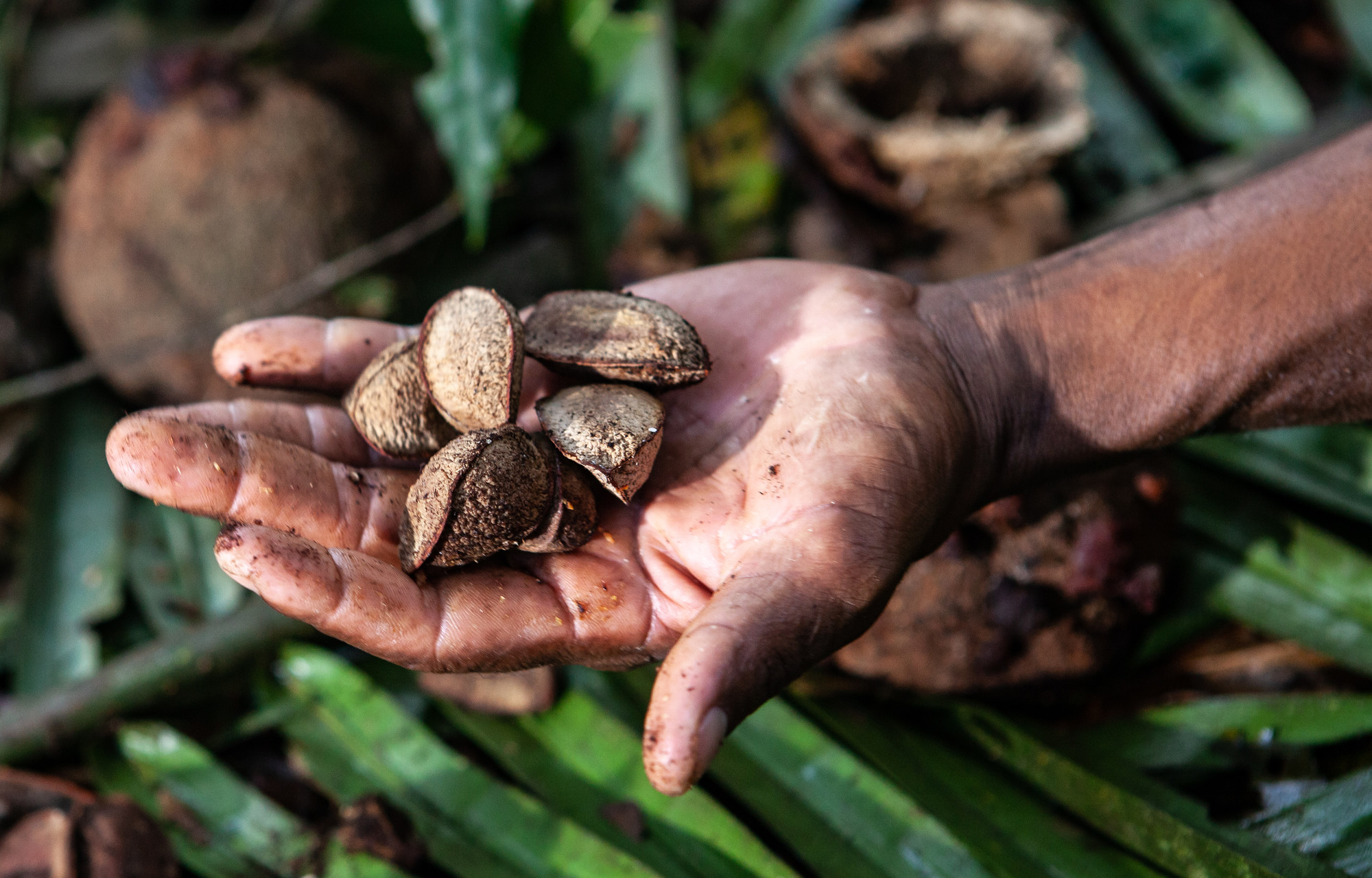
Keywords: Bolivia, Peru, Brazil, Amazonian nut, Amazon, market development, strategic communication, regional cooperation, selenium
Authors: Juan Pablo Linares Vizcarra, Carlos Tarrasón Collado
Publication date: August 2026
Introduction
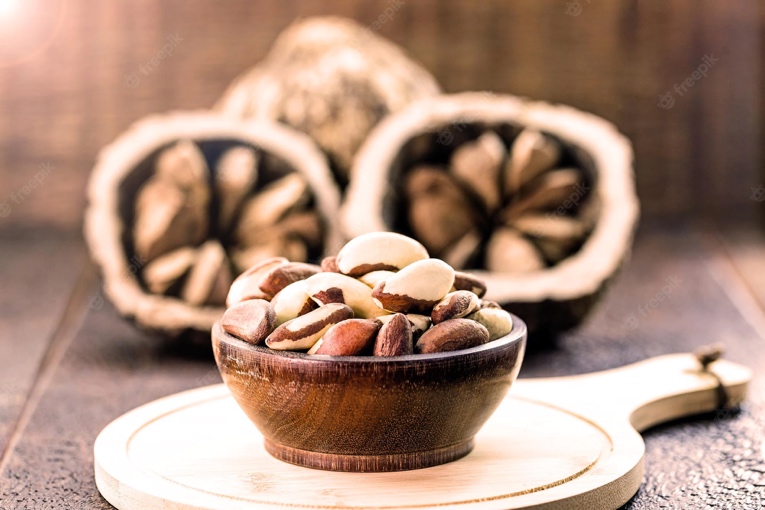
The Amazonian nut in bulk
The Amazonian nut is an exceptional product that, over the last year, reached almost 100 markets in the 6 inhabited continents and generated more than USD $350 million in exports. However, its international presence depends more on the extraordinary qualities of the product than on a deliberate and coordinated strategy to develop its market. This article examines, first, the origin and the biological and nutritional characteristics that make the nut unique; then it analyzes how it is consumed and positioned in the main export markets; and, finally, it identifies opportunities to strengthen its international positioning through a regional agenda of communication, research and joint promotion between the main producing countries: Bolivia, Brazil and Peru.
Origin and uniqueness
In botany, a nut is a fruit that has a covering that hardens, dries and is not fleshy when ripe. At first glance, the Amazonian nut may feel like one more in a handful, but it is distinguished from almonds, pecans, hazelnuts or other nuts due to different reasons. The complexity of this product forces us to enter a much more rigorous level of analysis in order to understand it in its entirety.
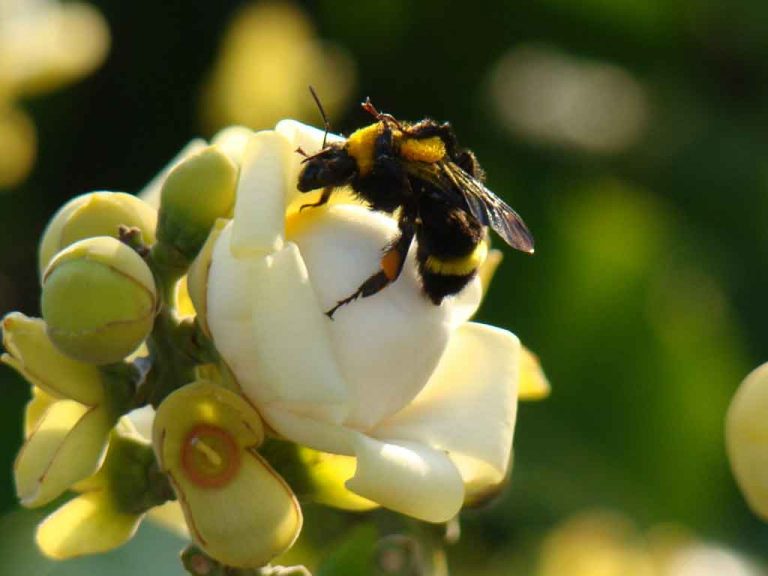
Bee Bombus transversalis pollinating flowers of the tree Bertholletia excelsa
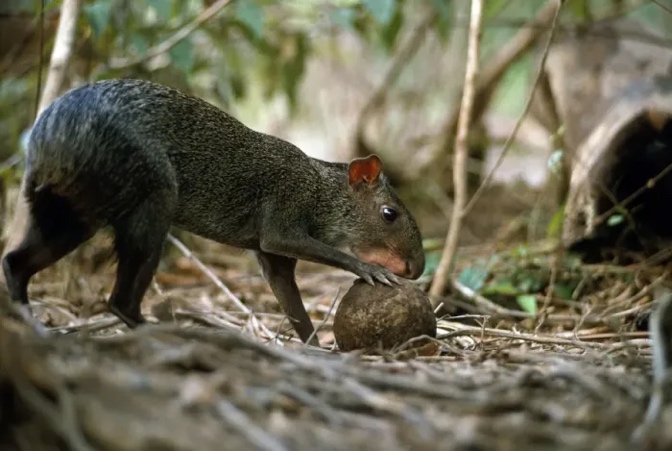
Agouti gnawing on an Amazonian nut coconut
The Amazonian nut, also known as Brazil nut, castaña, castanha-do-Pará, is found only in the Amazon forests of South America. Unlike other nuts, this is the seed of the Bertholletia excelsa tree that grows and is collected wild in forest ecosystems, rather than produced in extensive agricultural plantations. Therefore, their production and international trade depend purely on their harvesting. However, the fact that there are no commercial plantations outside the Amazon rainforest responds to a very specific cycle of biological dependence. First, the flowers of the Amazonian tree require at least 16 robust native bees such as Bombus transversalis capable of pollinating equally large flowers (FAO, 2020; Nieto Ramos et al., 2025). Without them, fruit production decreases drastically. In turn, these bees depend on diverse natural forests, where they find nesting sites and resources such as nectar, pollen and fragrances. Once the fruit is formed, one of the few animals with teeth strong enough to gnaw on the woody capsule, the agoutis, is responsible for the next phase: the dispersal of the seeds. After opening the coconut, this rodent consumes part of the seeds and buries others as a food reserve. Some of the latter are forgotten, naturally giving rise to new trees (MINAM, 2014). It should be noted that attempts to cultivate Amazonian nuts in plantation-type systems –with trees isolated from the native forest– have had very low yields compared to mature forests because the species largely depends on pollination by native bees and ecological dissemination by the agoutis.
In 2024, the production of the shelled Amazonian nut reached an estimated 50,300 tonnes1 in the main producing countries: Bolivia, Brazil and Peru. Of the total volume, Bolivia accounted for approximately 56%, followed by Brazil with about 33% and Peru with about 11%. However, interviews with actors in the chain suggest that Brazilian production could be much higher than that reflected here, so its participation should be interpreted with caution. This distribution is evidence of concentrated regional production, whose true potential depends on coordination.
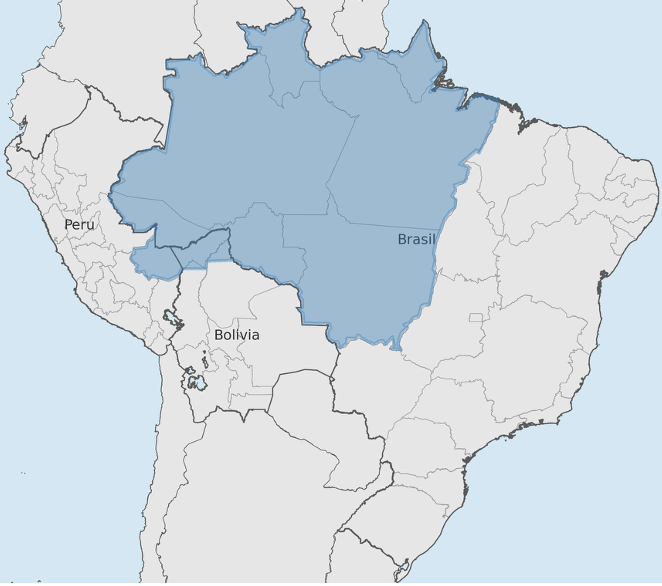
Map of the Amazonian nut area of the main producing countries
1 Figure calculated from the conversion factor of 0.47 to express equivalent data for shelled Amazonian nut (De Mello & Scussel, 2007).
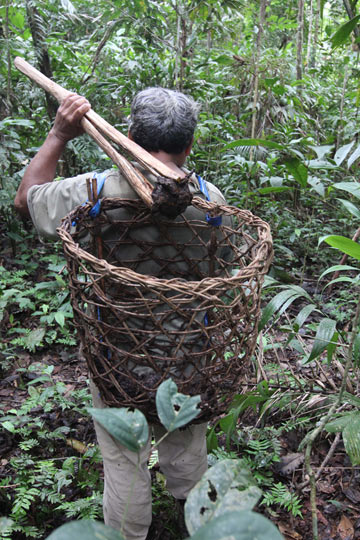
Harvesting the Amazonian nut
The Amazonian nut production chain is going through similar stages in the three countries, although with different degrees of industrial development. It all starts with the collectors, families and indigenous communities who, during the harvest, travel large areas to take the fallen coconuts to collection centers. There, the collectors open the capsule and separate the seed, before intermediaries, collectors, artisanal processors or processing companies take the product to continue with its drying, hulling and sanitary conditioning, including dehydration processes and control of aflatoxins –contaminants produced by certain fungi. In some cases, it is the Amazonian nut growers' associations and cooperatives themselves that collect, process and export directly. Once processed, exporting companies connect the product with importers and distributors who supply the different commercial channels. Behind each of these processes, there are people and entire communities whose livelihoods depend on the Amazon forest enduring. Surprisingly, about 2 million collectors and processors are employed: 1.2 million in Brazil, 600,000 in Bolivia and 200,000 in Peru. This activity represents up to 21% of the income of extractive households in Brazil, 51% in Bolivia and 56% in Peru (FAO, n.d.). We can, then, understand that the Amazonian fruit is also a non-timber forest asset that sustains, link by link, the economy of thousands of Amazonian families and preserves the Amazon forest.
But its production is not the only thing that cannot be replicated. The Amazonian product has an outstanding nutritional profile: it is considered a superfood due to its high concentration of antioxidants, vegetable proteins, unsaturated fats and minerals. According to Promueve Bolivia, in just 100 grams of nut there are more than 650 kilocalories of energy, concentrating almost 60% of the weight in fats and 13% in proteins. The dose also possesses remarkable amounts of magnesium, phosphorus, calcium, and iron. Despite this, the most outstanding feature is its selenium content. The Amazonian nut is the food with the highest concentration of natural selenium with an approximate amount of 1,920 micrograms per 100 grams. Even when compared to the next foods on the list, such as oysters, lamb liver, or yellowfin tuna, the difference ranges from 1,763 to 1,808 micrograms (USDA, 2018).
Since the recommended amount of selenium is 50-70 micrograms per day, a few nuts are enough to reach the daily recommendation for this micronutrient. But then, what are the benefits of consuming this amount? According to the National Institutes of Health (NIH), selenium helps both activate thyroid hormones and protect the gland during their production; strengthens the immune system by contributing to protection against infections; it works as an antioxidant protecting cells from oxidative damage; it can intervene in the formation and motility of spermatozoa; and there are even observational studies that suggest an association between good selenium status and a lower risk of cancer and cardiovascular diseases (2025).
| Selenium Concentration in Selected Foods | |
|---|---|
| Food | Selenium per 100 g |
| Brazil nut | 1,917 µg |
| Pacific oysters (cooked) | 154 µg |
| Lamb liver (cooked) | 116.1 µg |
| Yellowfin tuna (cooked) | 108.2 µg |
| Blue mussels (cooked) | 89.6 µg |
| Octopus (cooked) | 89.6 µg |
| Sunflower seeds (roasted) | 79.3 µg |
Source: Own elaboration with information from My Food Data
Undoubtedly, the Amazonian nut has a competitive advantage that is almost impossible to replicate. This biological uniqueness not only explains why the Amazonian nut exists where it exists but also determines its economy. Unlike other nuts, its supply cannot be multiplied by large plantations nor can its production be moved to new geographies. Therefore, the future of the category will not depend simply on producing more, but on capturing more value for each fruit harvested; and that battle is fought far from the forest.
Demand: One Nut, Three Promises
It is not news that Bolivia is the largest exporter of Amazonian nuts in the world giving its lead in the market since 2001. In 2024, the plurinational country exported a total of 27,000 tonnes of shelled nuts, equivalent to a value of USD $187 million. Peru shows a similar case, as it is also one of the main historical exporters. In 2024, 5,100 tonnes of shelled Brazil nuts were imported from the country for a total value of USD $37.7 million. Although the difference with Bolivia is more than 20,000 tonnes, this country ranked just below it. Brazil, on the other hand, tells a different story. While Bolivia and Peru export more than 90% of their production, Brazil is the only producing country that has a relevant domestic consumption. It is estimated that, in 2024, more than 60% of production was consumed nationally. Therefore, the same year, the export of shelled nuts totaled 3,300 tonnes equivalent to USD $26.3 million. Nonetheless, in terms of tonnes of exported Amazonian nut, the South American giant has dominated the ranking since the early 2000s. In 2024, 5,700 tonnes of Amazonian nut in shell were exported, with a cumulative value of USD $13.3 million. If most of the production is exported, who buys it and, above all, why?
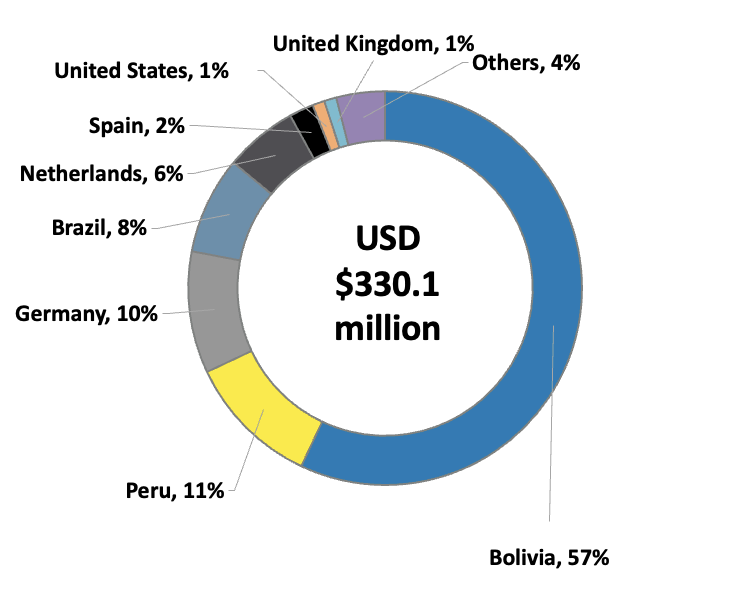 Top Exporting Countries of Shelled Amazonian nut by Value, 2024 (%)
 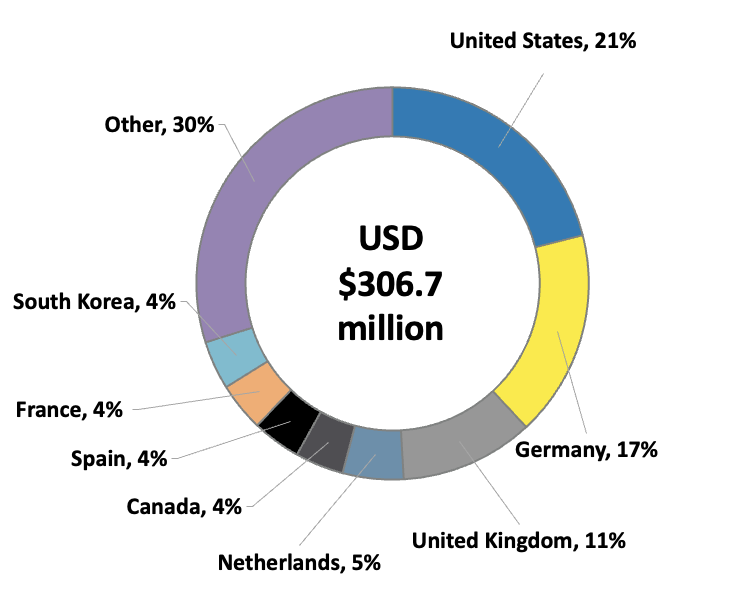 Top Importing Countries of Shelled Amazonian nut by Value, 2024 (%)
Source: Prepared by the authors with information from the International Trade Centre
To answer the first part, we need to consider where exports are headed. In 2024, the 5 main destination markets for Bolivia's shelled Amazonian nut accounted for more than 75% of the total value. Among them, 3 were European, represented by the Netherlands (31%), the United Kingdom (13%) and Germany (9%); and 2 North Americans, being the United States (21%) and Canada (3%). On the other hand, Peru showed a different position with South Korea absorbing 30% of the total value exported and the United States more than 20%; followed by Spain (7%), Germany (5%), New Zealand (3%) and others (32%). In the case of Brazil, it is necessary to point out not only the export of peeled nuts but also the in-shell market due to its importance compared to Peru and Bolivia. The shelled nut was mainly exported to the United States (39%), followed by Canada (17%), the Netherlands (6%), Australia (5%), Spain (3%) and others (29%); while nuts in shell were exported almost exclusively to China (47%) and Peru (42%).
Returning to the second part of our inquiry, the most immediate answer seems to be that it is bought by consumers interested in its concentration of selenium. However, this common denominator hides other notable differences. Based on the aforementioned destination countries and their commercial characteristics, it is identified that there are three key regions that serve to understand the international demand for this nut beyond selenium. On the one hand, Europe integrates the nut into everyday registers, functional and premium at the same time; in North America that same nut is a functional snack, premium argument, dietary code (keto or paleo) and even a "free-from" ingredient depending on the channel; and in East Asia, the status of imported superfood is validated differently depending on the market, either as a gift, as a daily consumption format or as a gourmet product.
Europe: Although selenium is one of the main inputs for the Amazonian nut in the ancient continent, it does not explain its positioning by itself. Europe has a historical demand for nuts and nutritious products that, in this case, are combined with attributes that generate trust: provenance, sustainability, minimal processing and compatibility with plant-based diets. This trust is often solidified by organic, Forest Stewardship Council (FSC) or Fair Trade certifications. Thus, the product is mostly marketed as a premium or gourmet snack in formats between 125 and 400 grams, both alone and in nut mixes, although it is also integrated into more everyday categories such as mueslis, cereals, bars, chocolates and bakery. This double presence reveals an important tension: the Amazonian nut can be part of regular consumption habits without necessarily being perceived as having an added value, even though its origin and uniqueness would allow it to be differentiated from other nuts.
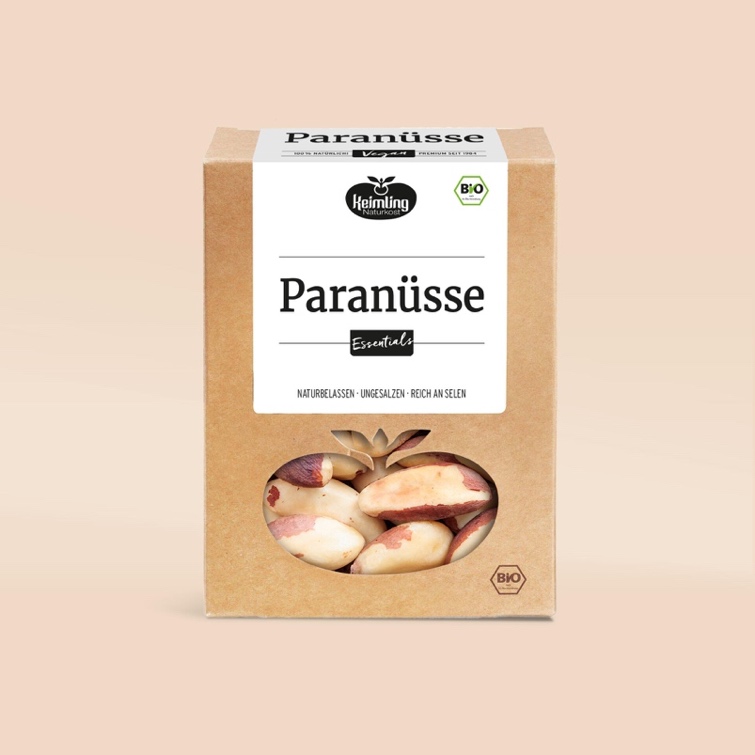 Pará nut, German product
Germany clearly illustrates this coexistence between familiarity and differentiation. In the German market, Paranuss (Pará nut) is marketed as a concentrated source of selenium and other minerals, associated with immune function, thyroid health, and antioxidant protection. It can be found raw, roasted, salted, or incorporated into the traditional Studentenfutter (literally "student food"), where it is one more ingredient in the mix. However, it also appears as a gourmet, "exotic" and healthy alternative to other savory snacks. This duality is reflected in the price. In the establishments analyzed, the Amazonian nut has a premium over almonds that ranges approximately between 23% in Edeka, 46% in Rewe, and 79% in organic stores such as Keimling Naturkost. The market, therefore, already recognizes an additional value, but does not always attribute it explicitly to its Amazonian origin or its relationship with forest conservation.
The Netherlands and the United Kingdom show two variations of the same regional pattern. In the Dutch market, nuts are widely integrated into mixtures of nuts, mueslis and cereals, which favors their frequency of consumption, but can dilute their identity within conventional categories. In other words, the demand for provenance exists in the Dutch market discourse, but the dominant channel still treats the product as a generic nut in a breakfast. In contrast, in the UK, its positioning is more explicitly premium: it appears in Deluxe or luxury blends and is linked to trends such as clean label, minimal processing and plant-based feeding.
Overall, Europe presents a market where the Amazonian nut is already integrated into established consumption habits, although with different degrees of differentiation: everyday when it is part of mixtures and cereals, functional when it is communicated as a source of selenium, and premium when it is linked to the exotic, the natural or the minimally processed.
North America: In North America, selenium opens the door with a different accent than the European one: less as an attribute and more as a function. This component fits into a consumption pattern that prioritizes nutritional characteristics with specific effects on health. On this nutritional basis, two additional readings are built that do not always coincide with each other. The first is that of the premium snack, of vegetable origin, high in protein and with healthy fat, inscribed in a story of conscious eating. The second, recent and growing, responds to the expansion of high-fat, low-carbohydrate diets such as paleo and ketogenic, where the lipid profile of the nut ceases to be just another nutritional fact and becomes the central selling point. The result, therefore, is a product that promises prevention, conscious indulgence and dietary compatibility with a wide range of formats, from 100 grams to more than a kilo, responding to both occasional and frequent consumers.
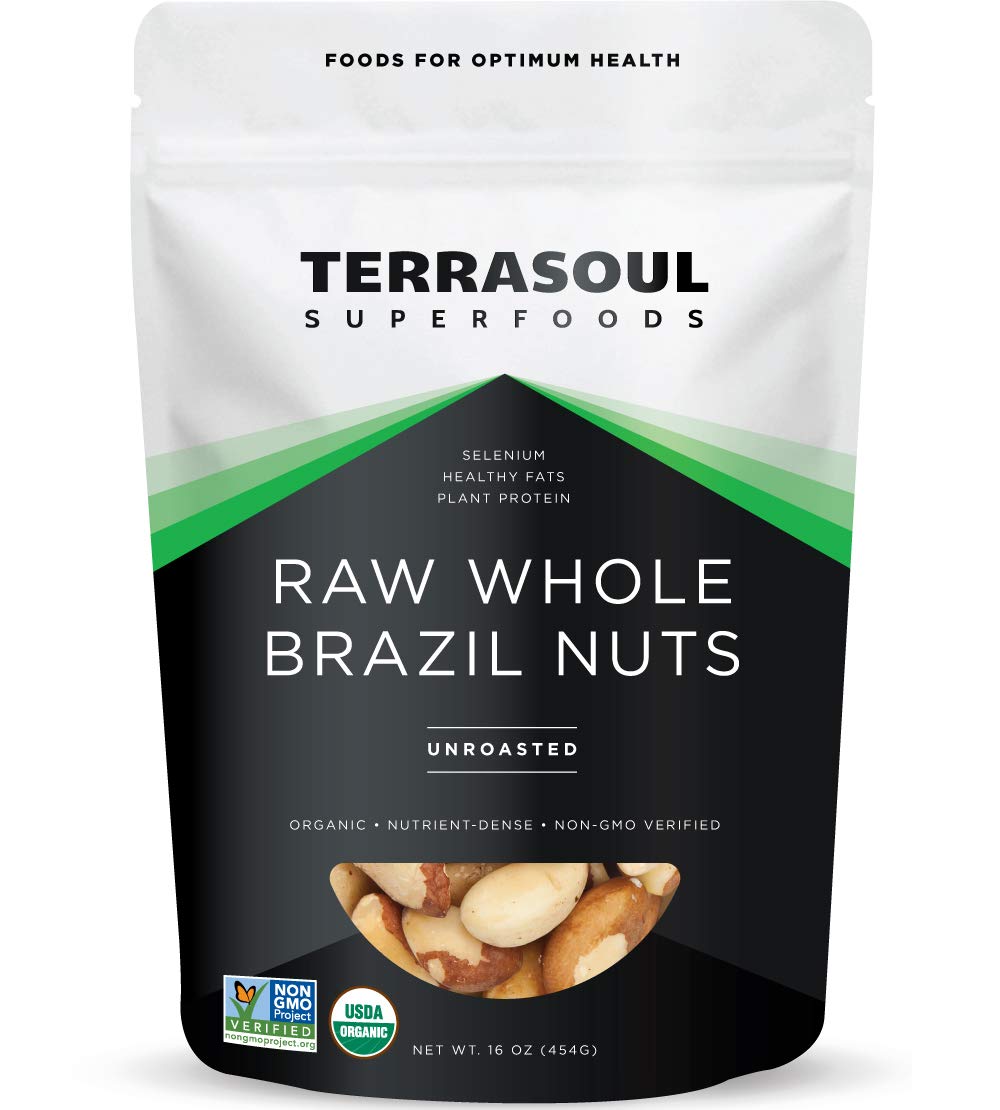 Brazil nut, U.S. product
The United States concentrates this duality in a single market. In retail, the Amazonian nut can appear both as a functional snack in bulk and as a premium ingredient in blends such as trail mixes. This differentiation is relevant because some channels capture a higher premium for the same product. Compared to almonds, their premium goes from 35% on Amazon to 69% on Walmart and reaches 113% on Sprouts Farmers, a channel more specialized in health and premium products, where the Amazonian nut costs more than double. Outside the retail, its positioning changes again. In the food industry, this same nut is dissolved in high-end mixes, granola bars, chocolate and bakery, where its identity is diluted among other ingredients. In foodservice, on the other hand, it briefly reappears as sophistication in haute cuisine. These channels show that there is a willingness to pay more for the Amazonian nut, but none of them fully explains whether the Brazil nut is purchased for the benefit it promises or the uniqueness it embodies.
Canada replicates the same demand structure, but shifts the response one level down the chain. Brazil nut or noix du Brésil (depending on the linguistic region) is positioned in retail with the same double nutritional and preventive argument as in its southern neighbor. The difference appears in the relative weight of the industrial channel. In Canada, nut-based milk processing is not a minor note, rather, it unfolds in milks, cheeses or creamy sauces. In addition, the Amazonian nut is used as a premium ingredient in premium end products, whose communication is also linked to the “free-from” trend. Canada does not present a different category from the United States, but a more explicit use of the industrial channel as a means of differentiation.
In general terms, North America presents a market where the Amazonian nut already operates simultaneously in several registers: functional when sold as a daily dose of selenium in bulk, premium when integrated into high-value blends and trail mixes, dietary when communicated under keto or paleo labels in the United States, and "free-from"" when it is processed into plant-based milk or cheese in Canada. The differentiation does not lie in the product itself, but in the channel, the occasion of consumption and the commercial narrative that accompanies it.
East Asia: In East Asia, selenium ceases to be the central argument and becomes one more credential within a different story: the Amazonian nut as an imported superfood, premium by definition. Its status as a product imported from the Amazon is enough to justify the price, rather than a certification or a seal, it is what legitimizes that status. On this basis, two logics of consumption are built. The first, driven by the regional profile as the world's leading consumer of nuts and the "seasonal gift culture", creates a demand for the nut as a premium gift. Here, the presentation format replaces any other sales argument and the product is positioned beyond self-consumption. The second, in expansion, is that of convenience. In this logic, presentations that serve for routine consumption in individual doses are positioned. This coexistence is reflected in the range of formats, which goes from 20 grams to one kilogram, covering both the gift set and the daily dose.
South Korea illustrates this pattern more clearly. Beura-jil neo-teu (브라질 너트, Brazil nut) is positioned as a nutraceutical superfood, almost always marketed on its own rather than as an industrial ingredient in yogurts, cookies, cakes, salads or bakery. For this reason, when it is not purchased exclusively as a nutraceutical, two formats stand out. The first is the high-end gift set, with packaging ready to give as gifts on different occasions, including traditional holidays such as the harvest festival, Chuseok (추석). The second is the “daily nuts” (하루견과) or "every-day" format, based on the measured amount of nutrients that the consumer needs from both the Amazonian nut and this one together with others. The price confirms this position against almonds. Brazil nuts cost 28% more at Emart and 25% more at SSG.com. In Korea, the premium remains relatively stable between the two outlets, albeit at a considerably higher absolute price level.
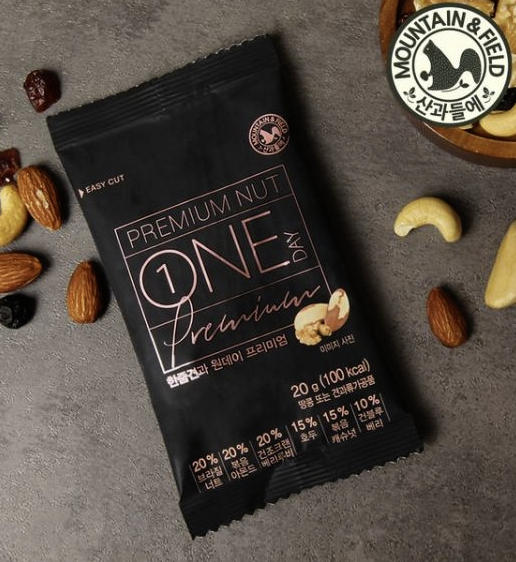 "Daily nuts" format, Korean product
 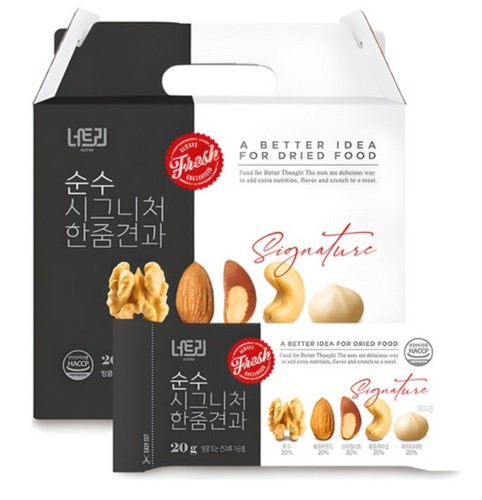 High-end gift set, Korean product
China and Japan show variations of the same superfood-premium axis. In China, the product is supported by the same two pillars, imported superfood and gift format backed by guanxi, a network of relationships sustained by reciprocity and mutual trust. Added to this is the growing e-commerce driven by influencers. Specifically in the case of the Asian giant, along with premium supermarkets, platforms such as Tmall Global, JD.com and Taobao are explicit points of sale. Japan, on the other hand, maintains the nutritional argument closer to selenium as an antioxidant, with a language of prevention and longevity. However, it is deployed in a more sophisticated foodservice channel than the rest of the region, appearing in exclusive hotels and restaurants as a prestigious ingredient. On the same gastronomic basis, Japan also shows an incipient demand for vegan products and dairy alternatives.
Therefore, East Asia presents a market where the Amazonian nut is positioned in the category of imported superfood, almost alien to other nuts. However, this category does not hold up in the same way everywhere. In Korea, it is validated through a seasonal gift calendar and social status; in China, of a gift network as a relational investment, now amplified by influencer-driven e-commerce; and in Japan, from a prestigious gastronomic channel that privileges the nutritional argument over that of the gift. The region is willing to pay a premium for a product whose value is not measured only in nutrients, but in the cultural narrative that surrounds it.
Strategic communication: from recognition to positioning
In the three regions analyzed, the demand for the Amazonian nut already exists: it pays a premium, sustains superior formats, finds a channel in snacks, ingredients and even gift rituals. What does not exist is an intention with investment in building that demand in a deliberate and consistent way, and that omission is not minor. Every kilo that is sold well is a kilo that protects the Amazon, that sustains harvesting communities, that supports local producers who depend on the forest, and that reaches a consumer willing to pay more for a product, without knowing that, in doing so, they finance the conservation of the most important biome for the world's climate and biodiversity. The category grows because the product is exceptional, not because there is a systematic market development, communication, or research effort behind it. Building this demand is, therefore, the most direct way to align the interests of the forest, the collector and the consumer in the same objective.
Europe is the region where traceability and sustainability are already part of the commercial language, and there is the clearest opportunity. In Germany, two retail networks of very different sizes coexist: the organic network, represented by chains such as Alnatura with 136 stores; and the generalist network, where Rewe operates in almost 7,000 points of sale and Edeka exceeds 11,000. Today the sale of Amazonian nuts is concentrated in the generalist channel, simply because that's where the volume is. However, it is in the organic channel, with customers already aware of origin and sustainability, where the premium over almonds shoots up by 56 percentage points. This differential confirms that the Amazonian origin and the conservation of the forest work as a sales argument when they reach a consumer willing to pay for them. The strategy can be developed in two stages. First, to consolidate the presence in the organic channel with a proposal based on traceability, forest conservation and international certifications. Once this positioning has been validated, it can gradually be transferred to the mass channel through campaigns aimed at cities and neighborhoods with similar profiles. In the Netherlands, the demand for provenance exists in the discourse, but not in the channel: the product persists as just another fruit. The already extensive organic retail network could make it visible at the point of sale with the same type of sustainability labeling that other categories already handle. The United Kingdom, on the other hand, already has the channel and a consolidated premium-organic infrastructure, so here communication can be leveraged directly on existing certifications and traceability, without the need to open or expand anything. Finally, the mixes and cereals channel, today a source of volume without differentiation, could add that same argument of origin and sustainability in the packaging, instead of reserving it only for the premium format and thus maintain a single narrative.
In North America, not all canals capture the potential value of Brazil nuts equally. The United States has a mature network of premium and organic supermarkets. Just adding the establishments that large chains such as Sprouts Farmers and Whole Foods have, we get a number greater than a thousand. In these supermarkets, consumers already recognize and remunerate attributes associated with health, natural origin and conscious eating. However, that recognition weakens when the product moves to generalist or digital channels. Compared to almonds, the premium of the Amazonian nut exceeds 110% in specialized stores. The difference suggests that, where the point of sale does not explain its uniqueness, part of its value is diluted and the nut once again competes as just another nut. So, it is in this already consolidated specialized network that a strategy focused on nutritional function and dietary compatibility can be sustained. What can be developed is a replicable message of concrete and measurable benefit, anchored in selenium, which adapts to the dietary code of each channel: functional in bulk formats, premium in high-value blends, dietary in keto and paleo lines. At the same time, investment could be made in research and development of transformed products. Canada already offers a model: the nut as an ingredient in plant-based alternatives fulfilling a dietary and nutritional function. Replicating and adapting this model would allow for expanded consumption occasions, reduce dependence on the snack channel and capture greater value for each kilo collected.
In East Asia, the opportunity is not to convince the market that the Amazonian nut is a premium product, but to give greater depth and permanence to a positioning that today is mainly based on its status as an imported superfood and its presentation. To do this, a narrative of Amazonian origin can be developed that explains why the product is exceptional and difficult to replace, avoiding that its value depends solely on novelty. This narrative can be materialized through a visible seal or certification of Amazonian origin, integrated into the packaging and, particularly, into the gift formats. In this way, the origin would cease to be a secondary piece of information and would become part of the value that the consumer communicates when giving the product as a gift, also linking it to the harvesting communities and the forest from which it comes. Unlike attributes such as "imported" or "exotic," which can be replicated by products of other origins, this distinction gives certified provenance a much more lasting validity than novelty. Once this message has been validated, the strategy can be extended to the everyday consumption format –such as the South Korean “daily nuts”– so that the category also competes on the daily occasion and does not depend only on the gift calendar.
Almonds: the market is also cultivated
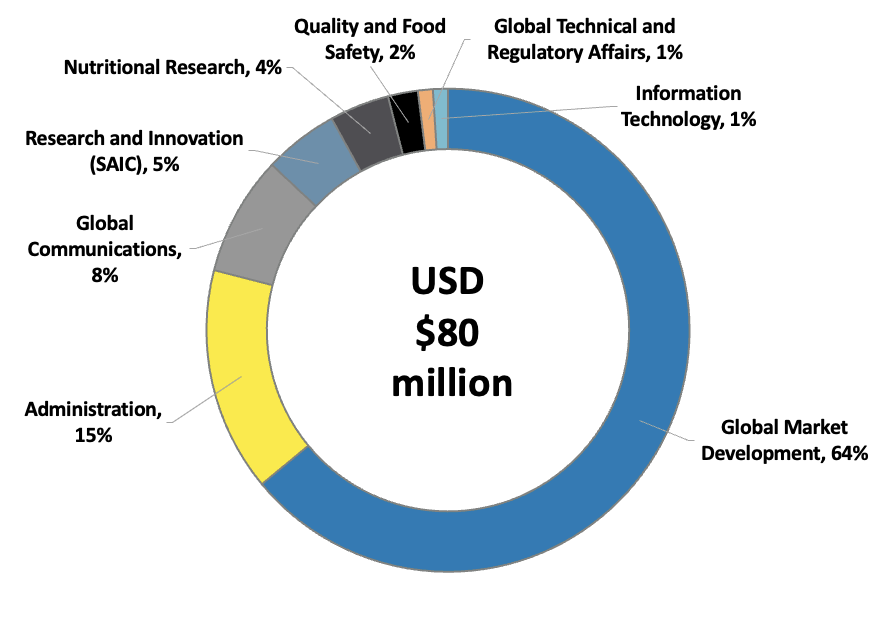
If California produces 80% of the world's almonds (ABC, 2024), it is not only because of its agricultural conditions, but because an institution decided to treat demand as something that is built, not assumed. The Almond Board of California (ABC) supports 7,600 growers and 99 processors with an annual budget of USD $80 million (2019), which varies by production. Each producer, by federal order since 2019, contributes 3 cents per pound harvested to the common fund; so, of every dollar raised, 72 cents go to marketing and 12 cents to research. The almond has a privileged position in the market because it decided to invest both in telling its story and in scientifically proving it, fronts that feed each other.
Almond Board of California Budget Distribution, 2024/25
Source: Authors' elaboration with information from the Almond Board of California
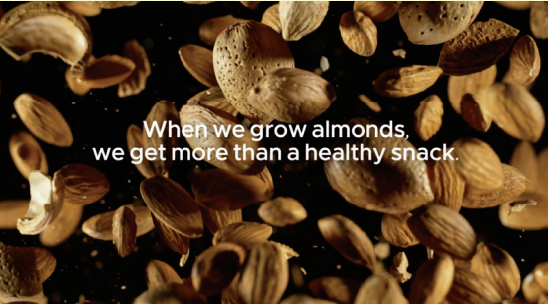 "Only California Will Do" Campaign
ABC's marketing translates into country-specific consumer campaigns, retail activations with measured returns, quantified business partnerships, and expansion into new markets in Asia and Africa, but it is the smaller component, Global Communications, that turns that activity into a brand argument: the "Only California Will Do" campaign communicates origin, agriculture, research, and sustainability as part of the product's value. a point at which marketing and research become the same message. On the science side, the Strategic Agricultural Innovation Committee (SAIC) translates agronomic priorities into field tools, while Nutritional Research and Food Quality and Safety support the nutritional argument that the communication repeats. At the same time, the industry monetizes co-products such as almond shells, a material that the Brazil nut production chain still treats as forest waste.
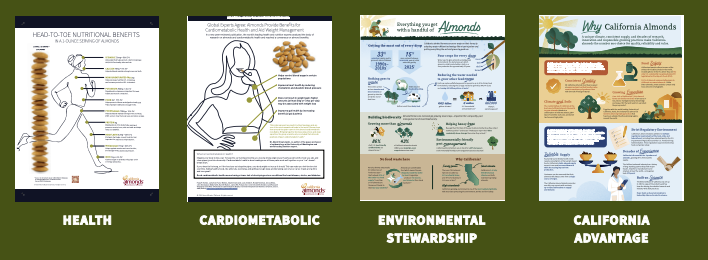 ABC resources to inform and engage stakeholders about the benefits of almonds
Transferred to the Amazonian nut scale, the mechanism offers a specific reference. A contribution equivalent to USD $0.066 per kilogram, applied to the 50,300 tonnes that Bolivia, Brazil and Peru produced together in 2024, could mobilize approximately USD $3.3 million per year, allocating more than USD $2 million to marketing and market development, while almost USD $400 thousand would go to research. Although it is a fraction of the ABC's budget, it would constitute a stable source to sustain a regional agenda that today depends on isolated initiatives, variable budgets and poorly coordinated national efforts. More than a model to replicate, the Californian case shows how much can be built when a minimum contribution becomes stable, collective and regional.
Conclusion
The Amazonian nut supports millions of people who collect and process it in the three countries, for whom it can represent more than half of the household income. Each kilo sold contributes to sustaining an economic activity linked to the permanence of the Amazon forests, their biodiversity and the communities that depend on them. This combination of economic, environmental and social impact is the story that the category still does not have enough strength, nor does it translate into concrete tools to approach an increasingly conscious consumer.
Europe, North America and East Asia show that demand already exists, although it is still dispersed. Buyers are willing to pay more for attributes such as selenium content, provenance, or product status. However, that value has not yet translated into a clear identity of origin. For the international buyer, the product can be Bolivian, Brazilian or Peruvian without this difference being evident or relevant. There is a lack of a consistent origin narrative that allows it to be distinguished, positioned and sustained with a systematic reversal over time. ABC shows how important it is to communicate both the benefits of a product and its own story. That model, scaled to the Amazonian nut, would require less than 1% of what Bolivia, Brazil and Peru already generate in exports alone.
The question is not whether the Amazonian nut deserves that investment, the evidence already answers that, but who assumes it and in what form. Should ProBolivia, APEX-Brasil or PromPerú continue to promote the product mainly from national efforts or can they be complemented with a regional mechanism through a joint fund that finances science, standards and promotion campaigns adapted by market?
The possibilities go beyond communication to the consumer. Alliances with processing companies and distributors at destination can expand the visibility of the Amazonian nut and develop joint programs with producing countries. The UNDP, FAO and ILO, UN agencies, are already working on the development of the chain, as well as the IDB, which has a new project to identify the best way to position the product at a global level. The challenge is to articulate these efforts and give greater prominence to collectors and communities, which do not have the resources for organization and promotion of large companies.
Other superfoods have experienced extraordinary growth and appreciation in recent years, such as avocados or blueberries. Even within Amazonian extractivism, Brazil's açaí shows how a forest-linked product can build recognition and value in international markets. The Amazonian nut already has a history, it is an exceptional product, it is in international demand and can have a strong environmental appeal. What is missing is to take a step forward by strengthening a common strategy. What, then, should we do with the Amazonian nut?